
From Keywords to Questions: How Search Has Changed and What It Means for Your Website
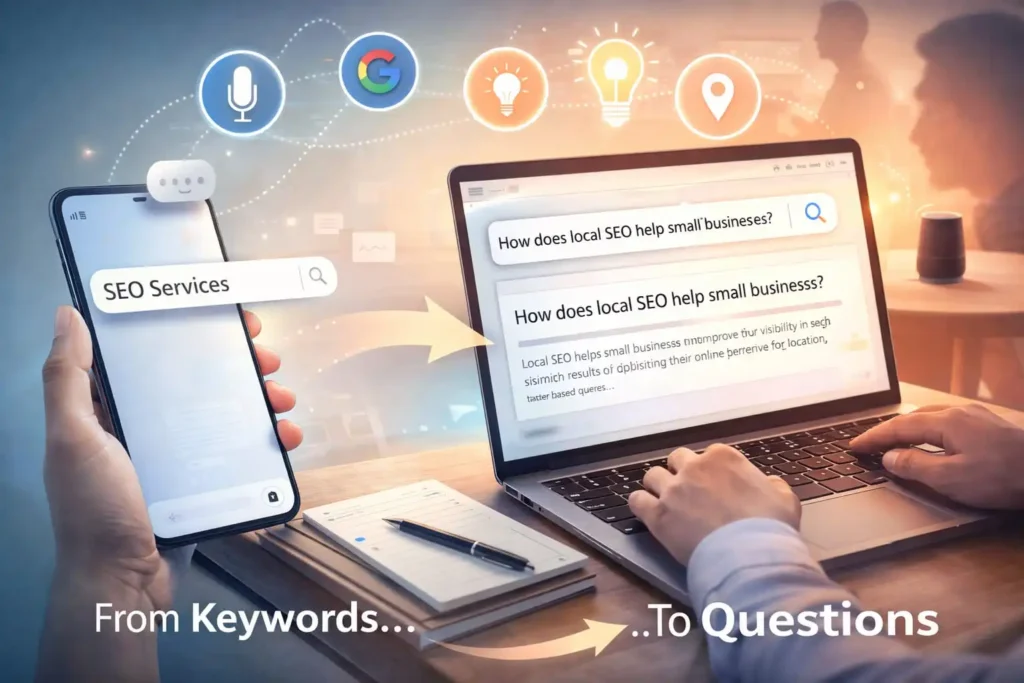
There was a time when online search was very basic. People typed a few words into Google, clicked a link, and searched through pages to find what they wanted. Websites were created mainly to match those words, and ranking high was the main goal.
That way of searching doesn’t match how people behave today.
Now, people talk to search engines almost like they talk to a person. They ask full questions, use natural language, and expect clear answers quickly. They also want results that feel relevant to their needs and their location. This shift from keywords to questions has changed how websites need to speak to users.
When Search Was All About Keywords
Earlier, users searched using short phrases like “SEO services,” “best restaurant,” or “web design company.” Search engines focused on finding pages that used these exact words.
Because of this, many websites were written more for machines than for humans. Content repeated keywords but didn’t always explain things well. Still, these pages ranked because search engines were not very good at understanding meaning or intent.
At that time, this system worked. People had patience, and search technology was still growing.
How Search Turned Into Conversations
As smartphones became common and internet speed improved, people’s expectations changed. They no longer wanted to open many links to understand one thing. They wanted quick and clear explanations.
Instead of typing broken phrases, people started asking questions like how a service works, whether it fits their business, or which option is best. Voice search made this even more natural, turning search into something closer to a conversation.
Search engines adapted by learning to understand what users actually want, not just the words they type.
Why Clear Answers Matter More Now
Today, search engines try to understand the purpose behind a search. One question can show curiosity, comparison, or readiness to take action.
Websites that explain things clearly make this easier. That’s why content with direct answers often appears in featured snippets, quick answers, and voice search results.
When users find answers easily, they trust the content more. And search engines reward content that helps users without effort.
Where AEO Comes In
As search became more question-based, content strategy had to change too. This is where Answer Engine Optimization (AEO) plays a role.
AEO is about making content easy to understand. Instead of long pages that talk around a topic, AEO focuses on answering real questions clearly. Each section has a purpose and explains one idea at a time.
When content is simple and well-structured, search engines and AI tools are more likely to show it as a direct answer. AEO isn’t about stuffing keywords. It’s about removing confusion.
Websites that follow this approach become trusted sources, not just ranked pages.
How GEO Adds Local Meaning to Questions
Many questions people ask today are connected to location, even if they don’t say it directly. Search engines automatically consider where the user is before showing results.
This is where Geographic Optimization (GEO) becomes important.
For example, searching for the best SEO service will show different results in different cities. When someone adds “near me,” location becomes even more important.
Websites that clearly show where they operate help search engines match their content with the right users. When clear answers are combined with local relevance, the content feels more trustworthy and practical.
This local connection often makes the difference between a visitor and an enquiry.
Why Question-Based Content Works Better
Questions show intention. Someone typing a keyword may just be browsing. Someone asking a question usually wants clarity before making a decision.
When a website answers clearly and feels relevant to the user’s needs and location, trust grows naturally. Visitors stay longer, understand better, and are more likely to contact you.
Websites built only for keywords may get traffic. Websites built for real questions build relationships.
Final Thought
Search is no longer about matching words on a page. It’s about understanding people and helping them.
Keywords still matter, but questions show purpose. AEO helps your content explain clearly. GEO helps it reach the right people. When both work together, your website doesn’t just appear in search results. It feels like the right answer.
If your content feels like a helpful conversation instead of a formula, you’re already doing modern search the right way.
How can I get your service